
Protein, Amino Acids & Hair Thickness
Why structural strength begins long before the strand emerges.
Hair thickness is often spoken about as if it’s purely genetic — fixed, predetermined, and unchangeable. But biologically, hair thickness is influenced by something far more dynamic:
The availability and balance of amino acids.
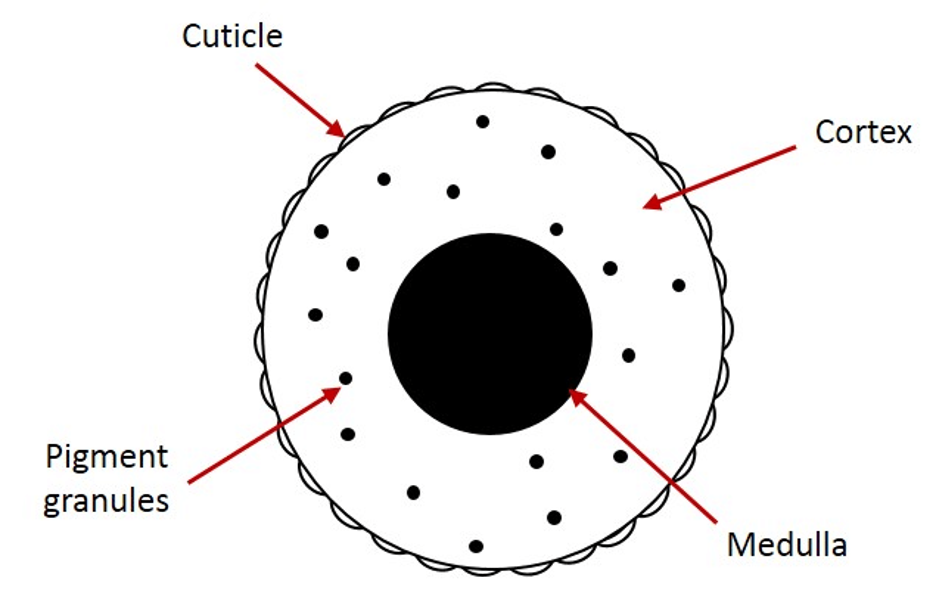
Hair is made of keratin — a structural protein built from amino acids such as cysteine, methionine, proline, and serine. The body cannot create keratin effectively without adequate building blocks, and it prioritises essential organs before it allocates nutrients to hair.
This is why thickness, fullness, and strength are very often nutrient-dependent, not just genetic.
Hair Is Protein — But Not All Protein Becomes Hair

Protein intake is only the beginning.
For hair density and strength to improve, the protein you consume must reach the follicle, which requires:
- Efficient digestion
- Adequate stomach acid
- Balanced gut microbiota
- Low inflammatory burden
- Consistent nutrient delivery
- Micronutrients that act as cofactors (Vitamin C, iron, zinc, MSM)
When any of these systems are strained, the conversion of dietary protein into keratin slows — even if your diet appears “protein rich.”
This explains why many women eat well yet still experience:
- Fine, weak strands
- Slower growth
- Easy breakage
- Sparse or inconsistent density
The issue isn’t effort — it’s bioavailability.
Amino Acids: The Real Builders of Thickness
Keratin relies heavily on specific amino acids:
Cysteine
Forms disulfide bonds — the “bridges” that give hair strength.
Methionine
A precursor to cysteine; supports growth and structure.
Proline & Lysine
Essential for collagen production around the follicle.
Glycine
Supports connective tissue and follicle anchoring.

These amino acids determine not only the growth rate, but the diameter and resilience of new hair fibres.
When availability is low, hair fibres emerge thinner, weaker, or shorter.
Vitamin C, MSM & Botanical Extracts: The Supportive Trio
This is where your brand’s core ingredient philosophy shines:
Vitamin C
Helps stabilize collagen around the follicle, Supports absorption of iron and amino acids, Protects follicles from oxidative stress.
MSM (Methylsulfonylmethane)
A bioavailable sulphur source. Strengthens disulfide bonds. Improves keratin structure. Reduces inflammatory strain around follicles
Fenugreek, Marshmallow Root & Rosemary
Botanical extracts shown to:
- Support circulation
- Calm inflammation
- Improve follicle environment
- Enhance nutrient delivery
- Reduce early shedding signals
Together, they create favourable conditions for thicker, denser strands.
The Difference Between Fast Growth & Strong Growth
Many treatments focus on accelerating growth without improving structure.
Hair may grow faster — but remains fine, fragile, or inconsistent.
True resilience requires:
- Sufficient amino acids
- An environment free from chronic inflammation
- Consistent nutrient absorption
- A balanced topical routine
When the internal and external environments align, hair doesn’t just grow — it transforms.
Week 6 Routine: Support the Structure
Focus on one small, structure-supporting action every day:
- Include a source of complete protein with at least one meal
- Add Vitamin-C–rich foods to support collagen and absorption
- Maintain scalp hydration and consistency
- Avoid aggressive heat or tight manipulation
- Support digestion (slow, mindful meals)
Small signals compounding over time create strong strands.
Product Support
To support keratin structure and thickness:
- Continue using 12 Teaspoons GROW Serum, Conditioning Spray, or Nourishing Oil to reduce inflammatory strain and improve follicle environment
- Use Tati Love Skin hydrating and barrier-supportive products to maintain skin resilience during nutrient optimization
This is not high effort — it’s aligned effort.
🔬 REFERENCES
- Rogers, G. E. (2004).
Hair follicle differentiation and regulation.
International Journal of Developmental Biology.
https://pubmed.ncbi.nlm.nih.gov/15272388/ - Harding, C. R. (2004).
The chemical composition of hair.
Clinics in Dermatology.
https://pubmed.ncbi.nlm.nih.gov/15261327/ - Jin, W., et al. (2013).
Amino acids and hair growth: Biochemical perspective.
Journal of Cosmetic Science.
https://pubmed.ncbi.nlm.nih.gov/23449106/ - Parihar, A. S., et al. (2020).
Role of MSM in hair health and inflammation modulation.
Journal of Dermatological Treatment.
https://pubmed.ncbi.nlm.nih.gov/31594441/ - Singh, S., et al. (2018).
Botanical actives for hair growth and follicle health.
Pharmacognosy Reviews.
https://pubmed.ncbi.nlm.nih.gov/29576757/


About author




Add comment