
Micronutrients: The Quiet Architects of Hair Density & Skin Resilience
Why balance matters more than volume
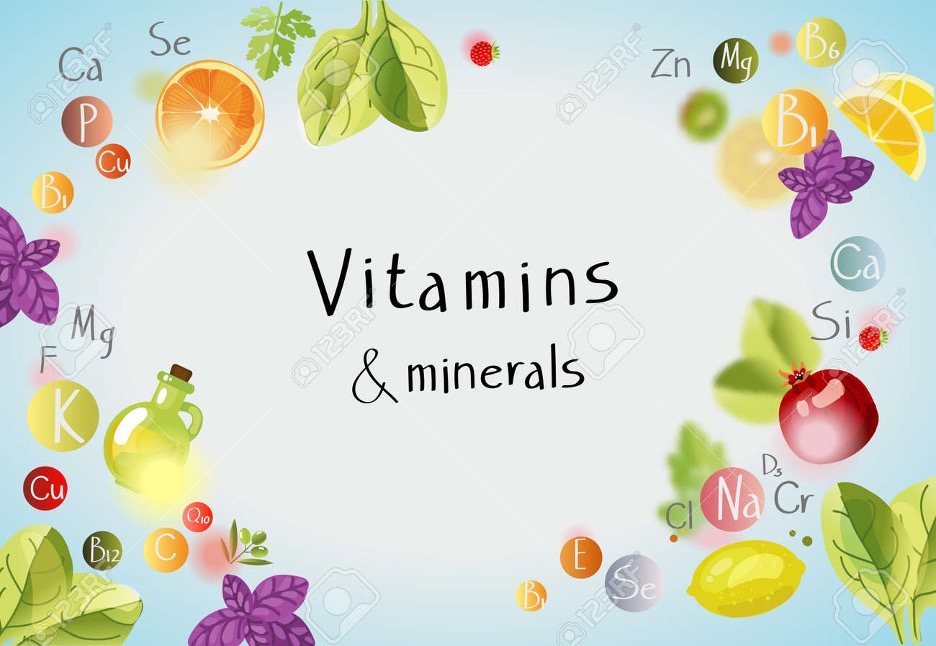
Micronutrients rarely get the attention they deserve, yet they quietly influence almost every process related to hair and skin — growth cycles, collagen production, inflammation, repair, energy metabolism, barrier integrity, and hormonal signaling.
But the most important truth is this:
Hair and skin don’t depend on isolated nutrients.
They depend on balance!
Too little creates deficiency.
Too much creates competition that tilts balance.
Enough — and in the right proportions — create a resilient body.
Understanding this balance allows you to support the body without overwhelming it.
Why Micronutrients Matter So Deeply to Hair Density
Hair density refers to the number of hair strands per square inch/centimeter on your scalps. Each hair follicle produces a minimum of 1 strand per follicle. Hair follicles are among the most metabolically active structures in the body. They divide rapidly, require steady nutrient supply, and respond immediately when something shifts internally.
Several micronutrients are especially relevant to follicle activity:

Iron — supports oxygen transport
Low stores can shorten growth phases and increase shedding, even when levels appear “normal.”
Zinc — supports cell division and repair
Deficiency can lead to thinning, increased inflammation, and slower regrowth.
Copper — supports cross-linking of collagen and elastin
An imbalance (too high or too low) affects follicle strength and pigmentation.
Vitamin D — influences follicle cycling
Insufficiency is associated with chronic shedding and inflammatory scalp conditions.
B Vitamins — support energy metabolism and keratin production
Especially biotin, niacin, folate, and B12.
None of these work independently — they rely on digestive absorption, hormonal context, and overall nutrient balance.
Skin Resilience Is Also Nutrient-Driven
The skin barrier, collagen matrix, and antioxidant defenses depend on micronutrients to maintain structure and stability.

Vitamin C
Central in collagen synthesis and antioxidant protection.

Vitamin A
Supports cellular turnover and barrier repair.
Vitamin E
Protects against oxidative stress and environmental damage.
MSM & Sulfur Compounds
Support keratin, reduce inflammation, and strengthen connective tissue.
When these nutrients are present in appropriate amounts, the skin looks calm, firm, and even-toned.
When balance is disrupted, the skin becomes reactive, dull, or slow to heal — even with excellent topical routines.
The Common Mistake: Over-Supplementation
Many well-intentioned routines become counterproductive because of excess.
For example:
- Too much zinc can deplete copper
- Too much iron can increase oxidative stress
- High-dose biotin can mask other deficiencies
- Excess vitamin A can irritate the skin and alter lipid balance
The issue is rarely the nutrient itself — it’s the imbalance it creates downstream.
This is why nutrition should be approached with precision, not intensity.
Why the Body Responds Better to Consistency
Hair and skin do not respond instantly to nutritional changes.
They respond to steady availability over time.
Nutrient stores rebuild gradually.
Follicles recalibrate slowly.
Skin strengthens cycle by cycle.
This is why extreme detoxes, rigid diets, and inconsistent eating patterns often backfire — they create instability, and instability interrupts repair.
The body thrives on rhythm.
The 12 Teaspoons Perspective
We design our ingredient philosophy around three principles:
- Reduce internal and topical inflammation
- Improve delivery and absorption through gentle consistency
- Provide supportive nutrients without overwhelming the system
This is why our formulations use balanced concentrations rather than aggressive doses — they’re crafted for long-term results, not short-term stimulation.
Week 5 Routine: Add, Don’t Overload
Choose one small nutritional support that strengthens balance:

- A daily portion of green leafy vegetables
- A mineral-rich food (pumpkin seeds, legumes, eggs)
- Vitamin-C–rich fruit
- A consistent hydration routine
- Regular meals rather than skipping and overeating
These signals matter more than dramatic changes.
Product Support
If you’re focusing on nutrient-based stability:
- Use your 12 Teaspoons Itchy Scalp and Dandruff Care routine to reduce inflammation and support follicle readiness.
- Prioritize Tati Love Skin barrier-supporting products to protect the skin and utilize the nutrients your body is delivering.
- Avoid introducing multiple new supplements at once.
We are building a system — not noise.
🔬 REFERENCES
- Almohanna, H. M., et al. (2019).
The role of vitamins and minerals in hair loss.
Dermatology and Therapy.
https://pubmed.ncbi.nlm.nih.gov/30993665/ - Guo, E. L., & Katta, R. (2017).
Diet and hair loss: Effects of nutrient deficiency and supplementation.
Dermatology Practical & Conceptual.
https://pubmed.ncbi.nlm.nih.gov/29607076/ - Pullar, J. M., et al. (2017).
The roles of vitamin C in skin health.
Nutrients.
https://www.mdpi.com/2072-6643/9/8/866 - Otten, J. J., et al. (2006).
Dietary Reference Intakes for micronutrients.
National Academies Press.
https://www.ncbi.nlm.nih.gov/books/NBK222310/ - Hamer, M., & Steptoe, A. (2012).
Cortisol, inflammation, and nutrient balance in health.
Brain, Behavior, and Immunity.
https://pubmed.ncbi.nlm.nih.gov/22178446/


About author




Add comment