
The Delicate Balance Behind Hair Strength & Shedding
Correcting one mineral can strengthen hair — or disrupt it. The difference lies in balance.
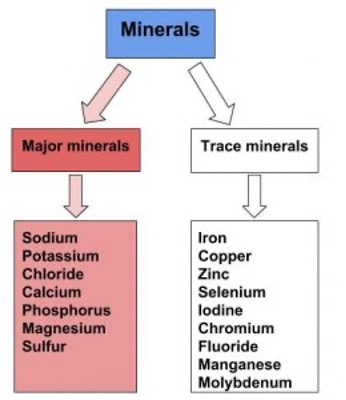
Minerals are deeply involved in hair growth, inflammation control, oxygen delivery, and follicle cycling. But they are also competitive. When one rises too high, another often falls.
This is why hair shedding, thinning, and slow regrowth sometimes occur after:
- Iron supplements
- Zinc supplements
- Long-term stress
- Dietary restriction
- Heavy menstrual cycles
- Copper IUDs in mineral-sensitive individuals
The issue is rarely the mineral itself — it’s the shift in equilibrium.
The body depends on iron, zinc, and copper working together, not independently.
Iron: Essential, Powerful — and Easily Misunderstood
Iron’s main role is to transport oxygen through the bloodstream.
Hair follicles are among the highest oxygen-demand structures in the body.
When iron stores dip (even slightly), shedding increases.
However…
Iron overload is just as problematic.
Excess iron increases oxidative stress and can inflame the follicle environment.
The hidden challenge: ferritin levels
“Normal” ferritin is not always “optimal” for hair.
But too much ferritin can worsen inflammation — especially when chronic stress or infections are present.
Balanced iron improves:
- Growth speed
- Shedding reduction
- Follicle energy metabolism
Imbalanced iron disrupts everything.
Zinc: Powerful, Protective — and Competitive

Zinc is essential for:
- Cell division
- Protein synthesis
- DNA repair
- Anti-inflammatory signaling
- Follicle cycling
When zinc is low:
- Hair becomes thin
- Growth slows
- Shedding increases
- Scalp inflammation worsens
But here is the part most people never hear:
High zinc can deplete copper — leading to increased shedding, dryness, and scalp sensitivity.
This is one of the most common “hidden causes” of worsening hair loss in people who take hair vitamins.
Copper: Tiny But Mighty
Copper is needed in small amounts — but its role is irreplaceable:
- Helps form strong collagen around follicles
- Supports blood vessel development
- Works with iron to transport oxygen
- Protects against oxidative stress
- Influences pigmentation and follicle stability
Too little copper can mimic iron deficiency symptoms.
Too much can interfere with zinc, increase shedding, and create inflammation.
The goal is not high levels — it’s harmonized levels.
The Interplay: Why Balance Matters
These minerals exist in ratio — not isolation.
A shift in one often shifts the other two.
For example:
- High iron reduces zinc
- High zinc reduces copper
- Low copper disrupts iron metabolism
- Low zinc heightens inflammation, affecting all three
- Chronic inflammation disrupts all mineral absorption
This is why hair often worsens with self-supplementing, even when intentions are good.
Hair follicles respond to coordinated signals, not aggressive correction.
How Internal Balance Shows Externally
When iron, zinc, and copper are in balance:
- Hair grows thicker and faster
- Shedding stabilizes
- Scalp becomes calmer
- Hairline regains density
- Skin looks brighter and more even
- Pigmentation irregularities soften
- Energy levels improve noticeably
When balance is disrupted:
- Growth slows despite consistent care
- Scalp becomes more reactive
- Strands weaken
- Breakage increases
- Shedding feels “out of nowhere”
- Skin becomes dull or inflamed
The body communicates imbalance clearly — through the hair and skin.
The 12 Teaspoons Connection
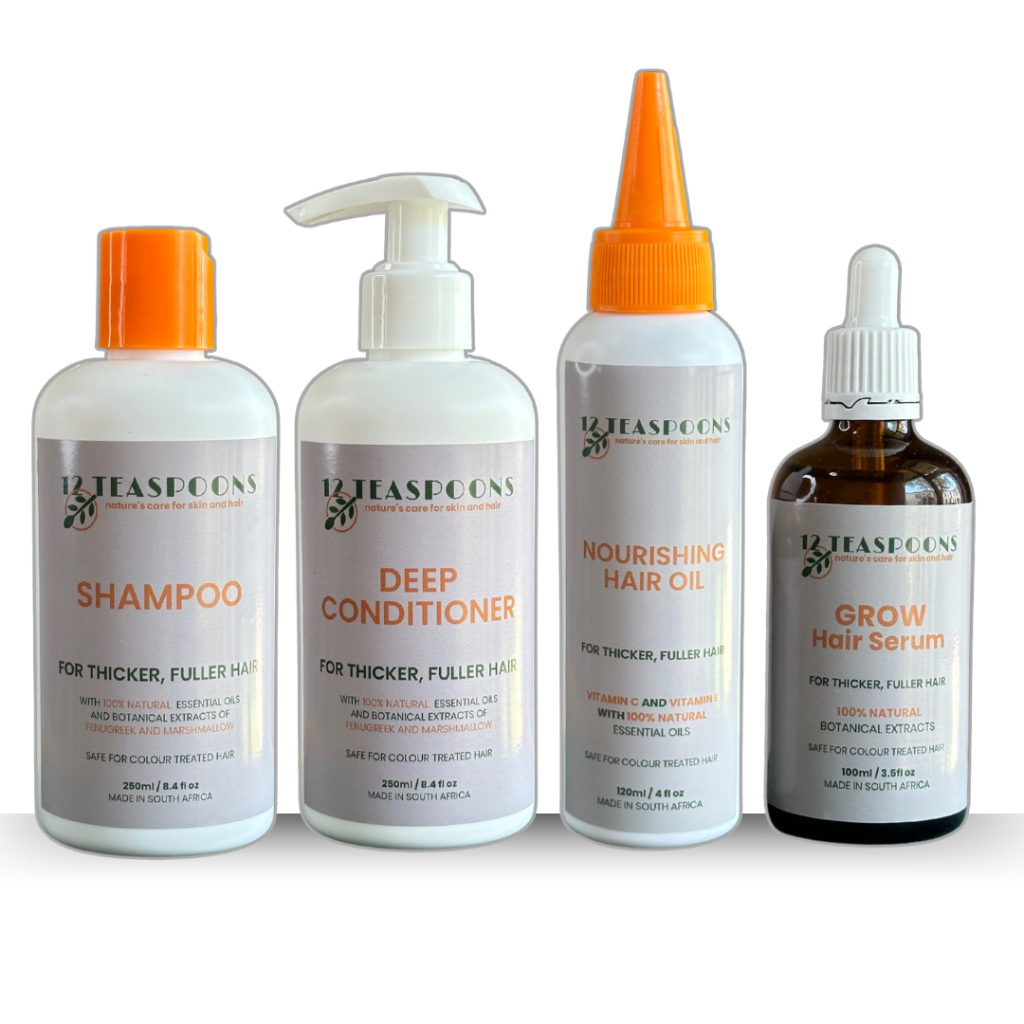
Your formulations support mineral balance indirectly by:
- Reducing inflammation (Aloe Ferox, Rosemary, MSM)
- Improving nutrient utilisation
- Calming chronic scalp stress
- Supporting circulation
- Strengthening the barrier (externally and internally)
When inflammation is lower, the body directs minerals more efficiently.
This is why many customers notice:
- Reduced shedding
- Thicker regrowth
- Less scalp irritation
within weeks of consistent use.
The system begins to rebalance.
Week 7 Routine: Support Mineral Harmony
Focus on the gentle actions that strengthen balance:
- Include mineral-rich foods (pumpkin seeds, legumes, leafy greens, eggs)
- Hydrate throughout the day
- Eat consistently — not erratically
- Avoid unnecessary zinc/iron supplements
- Keep scalp care calming and consistent
- Maintain barrier-supportive skincare
We’re building internal stability — not forcing outcomes.
🔬 REFERENCES
- Rushton, D. H. (2002).
Nutritional factors and hair loss.
Clinical and Experimental Dermatology.
https://pubmed.ncbi.nlm.nih.gov/12190640/ - Moeinvaziri, M., et al. (2009).
Iron status in diffuse hair loss.
Acta Dermatovenerologica Croatica.
https://pubmed.ncbi.nlm.nih.gov/19794363/ - Olsen, E. A. (2011).
Zinc and hair biology.
Dermatologic Surgery.
https://pubmed.ncbi.nlm.nih.gov/21527541/ - Prohaska, J. R. (2011).
Copper and human health.
Advances in Nutrition.
https://pubmed.ncbi.nlm.nih.gov/22332040/
Prasad, A. S. (2013).
Zinc deficiency and its functional implications.
Nutrients.
https://www.mdpi.com/2072-6643/5/2/283

About author




Add comment