
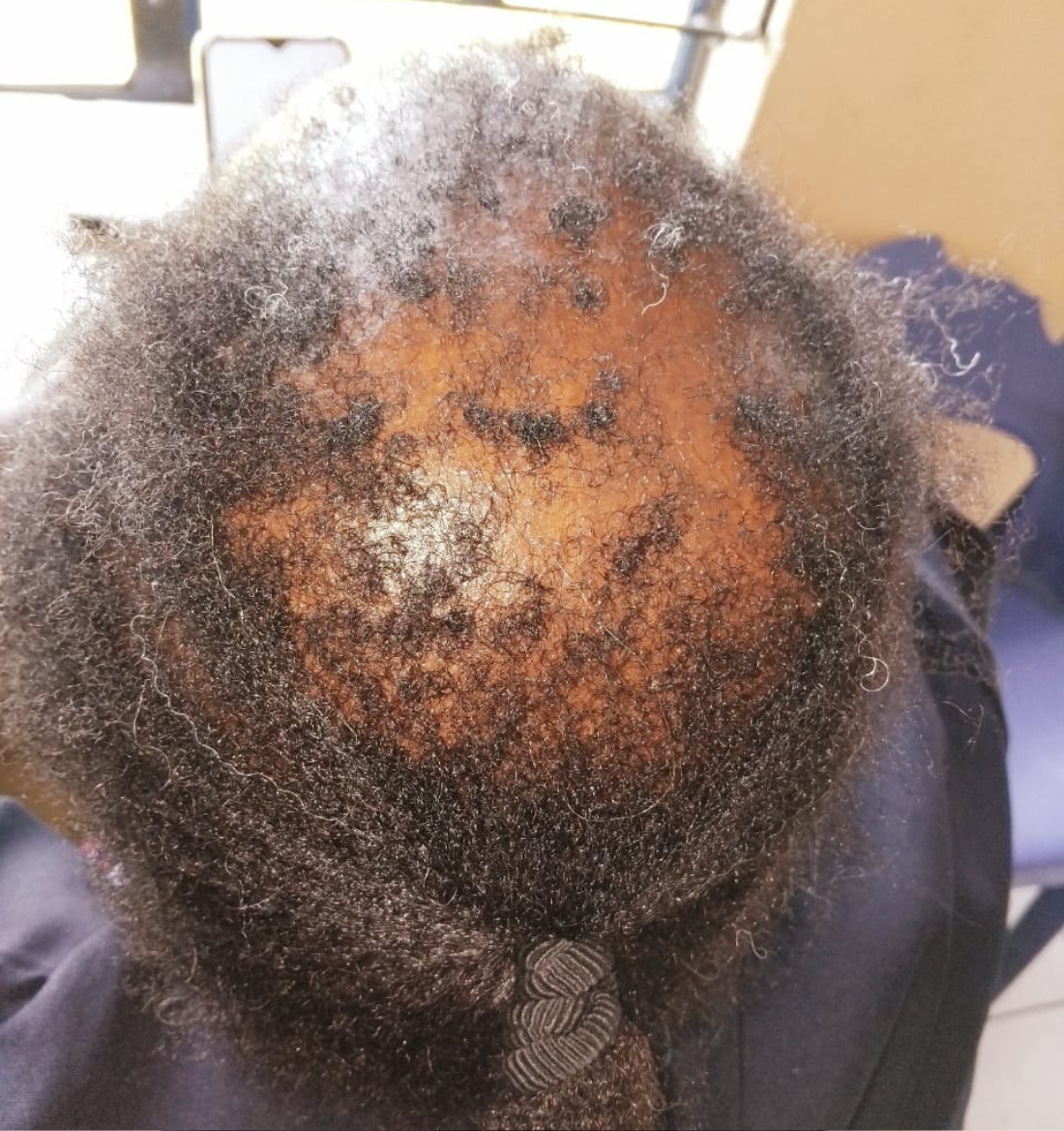
Why the body reallocates resources under pressure
Because survival always comes first.
Stress is often discussed in emotional terms — pressure, deadlines, responsibilities. But biologically, stress is an hormonal event.
When the brain perceives sustained pressure, it signals the adrenal glands to release cortisol, the body’s primary stress hormone.
Cortisol is not harmful by design. In fact, it is essential for survival. It regulates blood sugar, supports alertness, mobilises energy, and helps the body respond to immediate challenges.
But when cortisol remains elevated for extended periods, the body begins to reprioritise its resources.
Hair growth, skin repair, and energy balance are among the first systems affected.
Why Hair Responds Quickly to Stress
Hair follicles are highly sensitive to hormonal signals. Elevated cortisol influences the hair cycle in several ways:
- Shortens the growth phase (anagen)
- Accelerates entry into the shedding phase (telogen)
- Reduces nutrient delivery to follicles
- Increases inflammatory signalling around the scalp
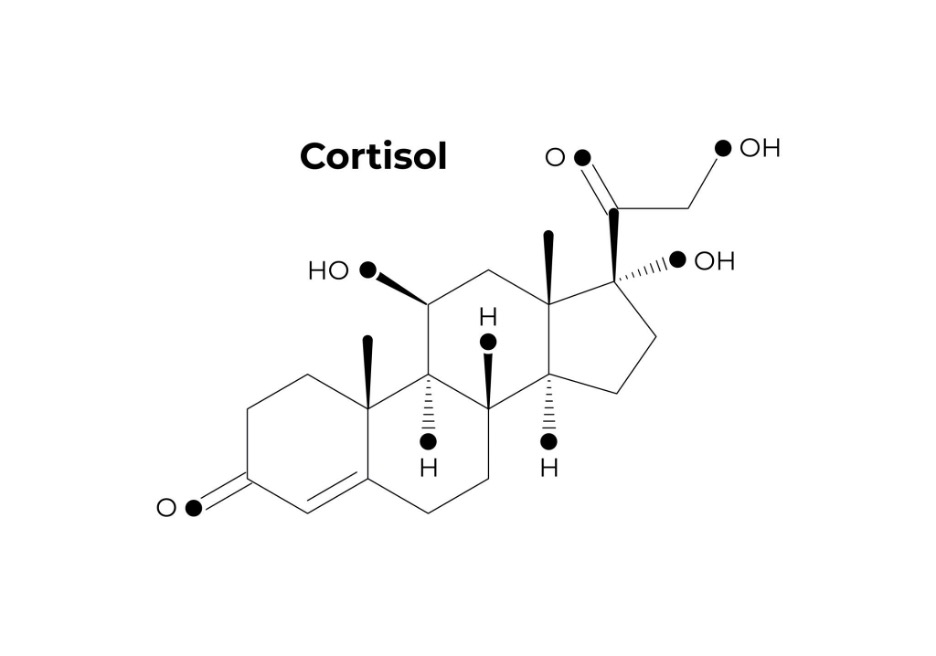
This phenomenon is known as telogen effluvium — a temporary but sometimes alarming increase in shedding following physiological or emotional stress.
The follicle itself is usually not damaged.
It has simply shifted into a different phase of the cycle.
Once the internal environment stabilises, growth typically resumes.
Skin Under Stress: The Barrier Weakens
Cortisol also influences the skin’s structural integrity.
Research shows prolonged stress can:
- Reduce collagen synthesis
- Increase transepidermal water loss
- Slow wound healing
- Trigger inflammatory skin responses
This is why stressful periods often coincide with:
- Breakouts
- Dullness
- Sensitivity
- Flare-ups of eczema or dermatitis
The skin barrier becomes more reactive because cortisol alters immune signalling in the skin.
The Gut–Stress Feedback Loop
Stress hormones also influence digestion.
Elevated cortisol can:
- Slow gut motility
- Alter microbiome composition
- Increase intestinal permeability
- Reduce digestive enzyme production
This creates a feedback loop:
Stress disrupts digestion → digestion influences hormones → hormones affect hair and skin.
Breaking this cycle requires supporting both systems gently and consistently.
Energy Allocation: Why Fatigue Appears
When cortisol remains elevated, the body reallocates energy toward immediate survival functions — maintaining blood sugar, cardiovascular stability, and neurological alertness.
Processes that are not essential for immediate survival, including hair growth and skin renewal, receive fewer resources.
This does not mean the body is malfunctioning.
It means the body is protecting you.
Understanding this shift allows us to respond with care rather than frustration.
The 12 Teaspoons × Tati Love Skin Perspective
Your formulations support the body during stress by stabilising the external environment.
12 Teaspoons Hair Care
Ingredients such as Aloe ferox, rosemary extract, MSM, and fenugreek help:
- Reduce scalp inflammation
- Improve microcirculation
- Maintain a supportive follicle environment during stress cycles
Tati Love Skin
Barrier-supportive formulations help:
- Maintain hydration
- Protect collagen integrity
- Calm inflammatory responses triggered by stress hormones
External support cannot eliminate stress, but it helps the skin and scalp remain resilient while the body recalibrates.
Routine: Lower the Stress Signal
Instead of trying to eliminate stress entirely, focus on lowering the biological stress signal:

Morning
- Gentle sunlight exposure
- Protein-rich breakfast
- Calm start rather than rushing
Midday
- Short walk or stretching break
- Hydration
- Avoid skipping meals
Evening
- Reduce bright screens before bed
- Magnesium-rich foods or supplements
- Slow breathing or quiet time
These signals tell the nervous system that it is safe to shift from survival mode to repair mode.
🔬 REFERENCES
- Arck, P. C., et al. (2006).
Stress and the hair follicle: Exploring the connections.
American Journal of Pathology.
https://pubmed.ncbi.nlm.nih.gov/16651600/ - Peters, E. M. J., et al. (2006).
The neuroendocrine regulation of hair follicles.
Journal of Investigative Dermatology.
https://pubmed.ncbi.nlm.nih.gov/16410795/ - Chen, Y., & Lyga, J. (2014).
Brain–skin connection: Stress and skin health.
Dermatology Research and Practice.
https://pubmed.ncbi.nlm.nih.gov/24765225/ - Foster, J. A., et al. (2017).
Stress and the gut microbiome.
Nature Reviews Gastroenterology & Hepatology.
https://pubmed.ncbi.nlm.nih.gov/28745373/ - Slominski, A., et al. (2013).
Skin as an endocrine organ.
Endocrine Reviews.
https://pubmed.ncbi.nlm.nih.gov/23576040/

About author


Add comment