
Why Most Hair & Skin Challenges Start Internally

And why topical care works best when the inside is supported
It’s tempting to view hair and skin as surface systems — visible, external, and therefore correctable from the outside.
But biologically, hair and skin are end-point tissues.
They reflect what the body has after vital systems have been supplied.
This distinction explains a great deal.
When the body is under strain — nutritional, hormonal, inflammatory, or metabolic — it doesn’t malfunction. It reprioritizes. Energy and nutrients are directed toward survival and regulation first. What reaches the hair follicle or the skin barrier is what remains.
This is why consistent topical care can coexist with slow progress — and why internal support often changes the trajectory entirely.
Biological Priority: How the Body Decides Where Resources Go
From a physiological perspective, the body is exceptionally efficient.
Organs essential for immediate function — the brain, heart, liver, immune system — are prioritised. Hair follicles and skin renewal, while important for protection and identity, are considered non-essential in survival terms.
This doesn’t mean they are neglected.
It means they receive resources once stability is assured elsewhere.
When intake, absorption, or regulation is compromised, hair and skin often show the earliest signs — not because they are weak, but because they are honest.

Absorption Matters More Than Intake
Modern wellness culture focuses heavily on what we consume.
Biology is equally concerned with what we absorb.
Several factors influence whether nutrients actually reach hair follicles and skin cells:
- Digestive efficiency
- Gut microbial balance
- Inflammatory burden
- Liver detoxification capacity
- Hormonal signalling
- Blood flow and oxygen delivery
This is why two women can follow similar routines with very different outcomes.
The difference is rarely effort.
It’s usually internal context.
The Gut as a Distribution Hub
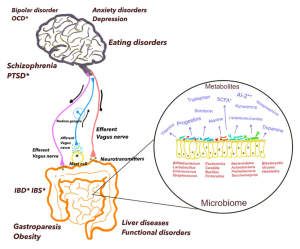
The gut is not just a digestive organ. It’s a regulatory centre influencing immunity, inflammation, hormone metabolism, and nutrient transport.
When gut integrity is compromised:
- Micronutrient absorption becomes inconsistent
- Inflammatory signalling increases
- Hormone clearance is altered
- Skin and scalp sensitivity increases
Supporting hair and skin without addressing the gut often leads to cyclical progress — improvement followed by regression.

Hormones as Messengers, Not Villains
Hormones don’t create problems in isolation.
They relay information about the internal environment.
Shifts in estrogen, progesterone, cortisol, insulin, and thyroid hormones affect:
- Blood flow to follicles
- Length of hair growth cycles
- Sebum composition
- Collagen synthesis
- Skin barrier resilience
When hormonal signals reflect stress or insufficiency, hair and skin respond accordingly.
This is why topical stimulation alone is rarely sufficient.

Internal Support Doesn’t Replace External Care — It Enables It
This is not an argument against skincare or scalp care.
It’s an argument for integration.
Topical care:
- Calms local inflammation
- Supports barrier and scalp environment
- Protects what is already present
Internal support:
- Determines what resources arrive
- Influences cycle length and repair capacity
- Shapes long-term outcomes.
When both are aligned, results stabilize.
The 12 Teaspoons Perspective
Our formulations and routines are designed with one assumption:
The body wants to respond — if conditions allow it.
That’s why we prioritise:
- Inflammation-aware ingredients
- Barrier-first skin care
- Scalp environments that signal safety
- Consistency over intensity
We don’t override biology.
We support it.
Week 4 Routine: Support Delivery, Not Just Application
This week, consider the systems that deliver results:
- Eat regularly and without rush
- Hydrate consistently
- Maintain gentle daily movement
- Keep routines steady rather than experimental
You are not adding more.
You are improving access.
Product Support
At this stage of the journey:
- Maintain scalp routines that calm and nourish
- Continue skin care that protects and repairs
- Avoid stacking new actives or supplements
We build once the foundation holds.
🔬 REFERENCES
- Paus, R., et al. (2014).
Hair follicle biology: The basics.
Seminars in Cutaneous Medicine and Surgery.
https://pubmed.ncbi.nlm.nih.gov/25118860/ - Clayton, P., et al. (2019).
Micronutrient absorption and gut health.
Nutrients.
https://www.mdpi.com/2072-6643/11/11/2715 - Sekirov, I., et al. (2010).
Gut microbiota in health and disease.
Physiological Reviews.
https://journals.physiology.org/doi/full/10.1152/physrev.00045.2009 - Thornton, M. J. (2013).
Hormones and hair growth.
Journal of Endocrinology.
https://joe.bioscientifica.com/view/journals/joe/217/2/R13.xml - Elias, P. M., & Wakefield, J. S. (2014).
Skin barrier function and repair.
Journal of Investigative Dermatology.
https://www.jidonline.org/article/S0022-202X(15)37758-9/fulltext


About author




Add comment